
1 latte. 4 AM. 1,100m. 3 frames. 2 dogs. 19 minutes.
Michel Heitzmann

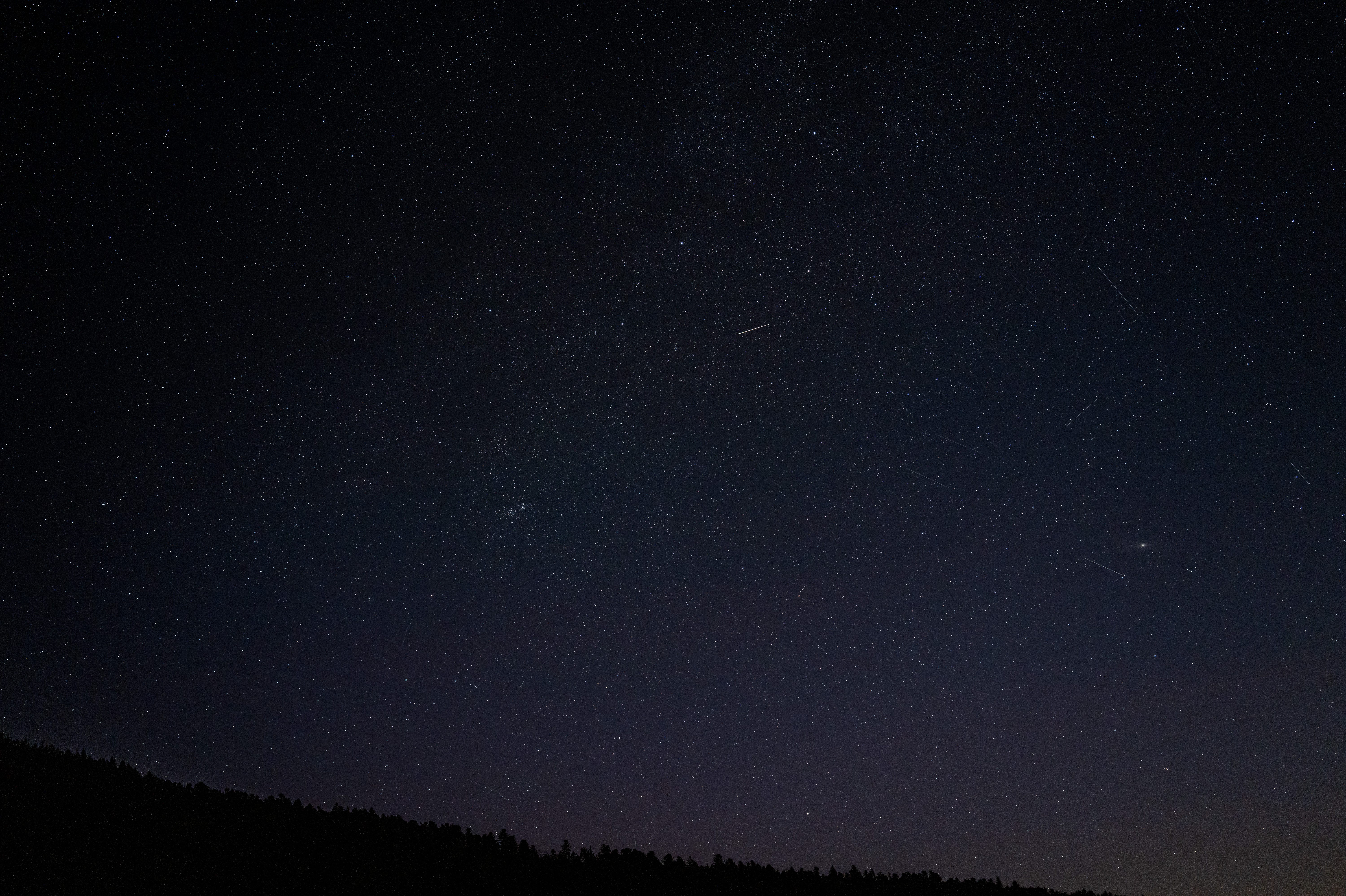
© Michel Heitzmann - Elon and the meteor
Monday I wrote an article about a meteor shower. Tuesday I asked fifty people to step outside. Wednesday I went up the mountain a bit myself.
3:30am. I shoved the dogs in the truck. I was completely disoriented and could not find my gear. Made myself a latte.
My son woke up to go to the bathroom — I’d made too much noise. I asked if he wanted to come along. He said, literally, fuck off. I left without him, but now with a smile.
Off we went up to 1,100 meters.
4am. 2 degrees. Dogs disappointed I was setting shop when a walk was expected. The first warmth of sun starting low on the horizon though sunrise itself was still a long way off. I opened the back of the truck. Sat on it and gazed. The things were flashing. I forgot to make a wish and got busy capturing some of it on camera.
I took three frames that matter among many. Nineteen minutes between the first and the last.
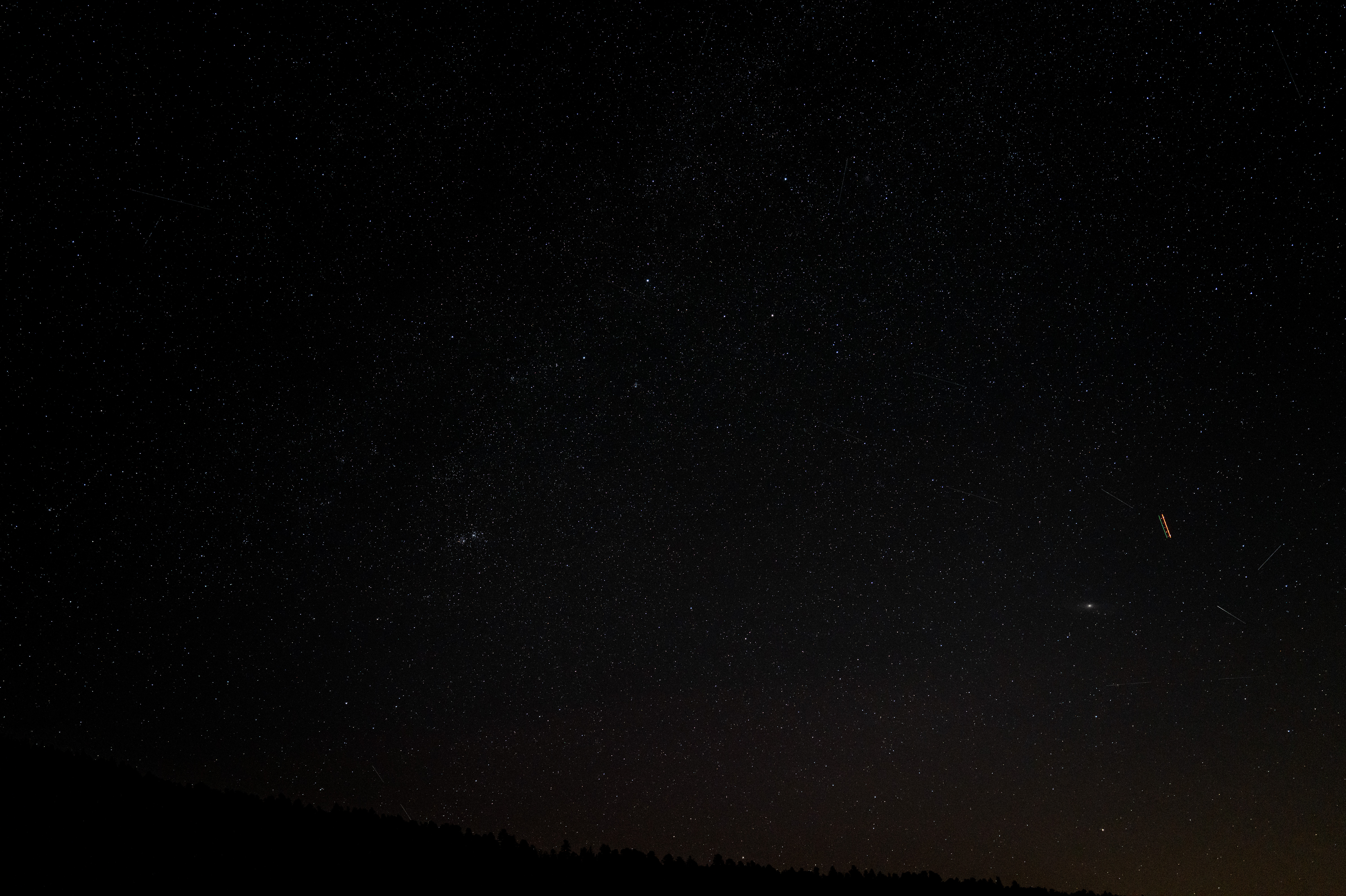
© Michel Heitzmann - 04:36
04:36. Sky at its darkest. The Milky Way running diagonal through the upper right of the frame, faint but present — a slight brightening of the sky, not a stripe. Mars low, warm, steady. The Andromeda Galaxy sitting right of centre as a small oval smudge. Andromeda is 2.5 million light years away and is the furthest thing most people can see with their eyes, though most people don’t. Five or six of Elon’s satellites rolled past in parallel during the six-second exposure. One plane, warm-toned, dashed.c
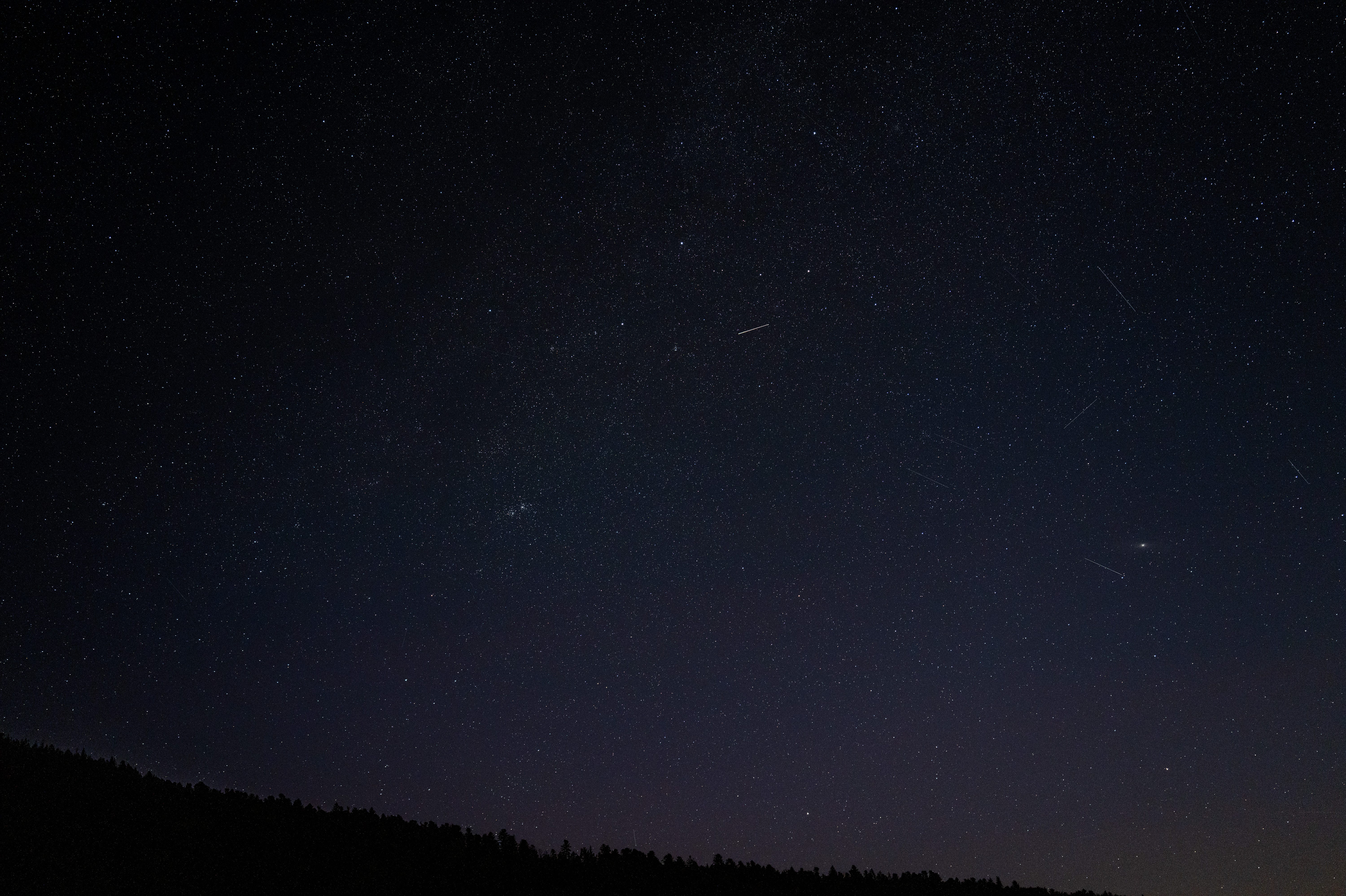
© Michel Heitzmann - 04:51
04:51. Fifteen minutes later. The sky had begun to lift on the horizon — dawn was still under the mountains but already thinking about it. A meteor arrived. Short, bright, with colour evolving along its length: warm orange leading edge, white-hot core, cooling blue trail. That colour gradient is how you tell it was a meteor and not a satellite. The grain of dust was ablating at different temperatures as it disappeared. A thing from 1861 burning above Switzerland at 49 kilometres per second, over in under a second.
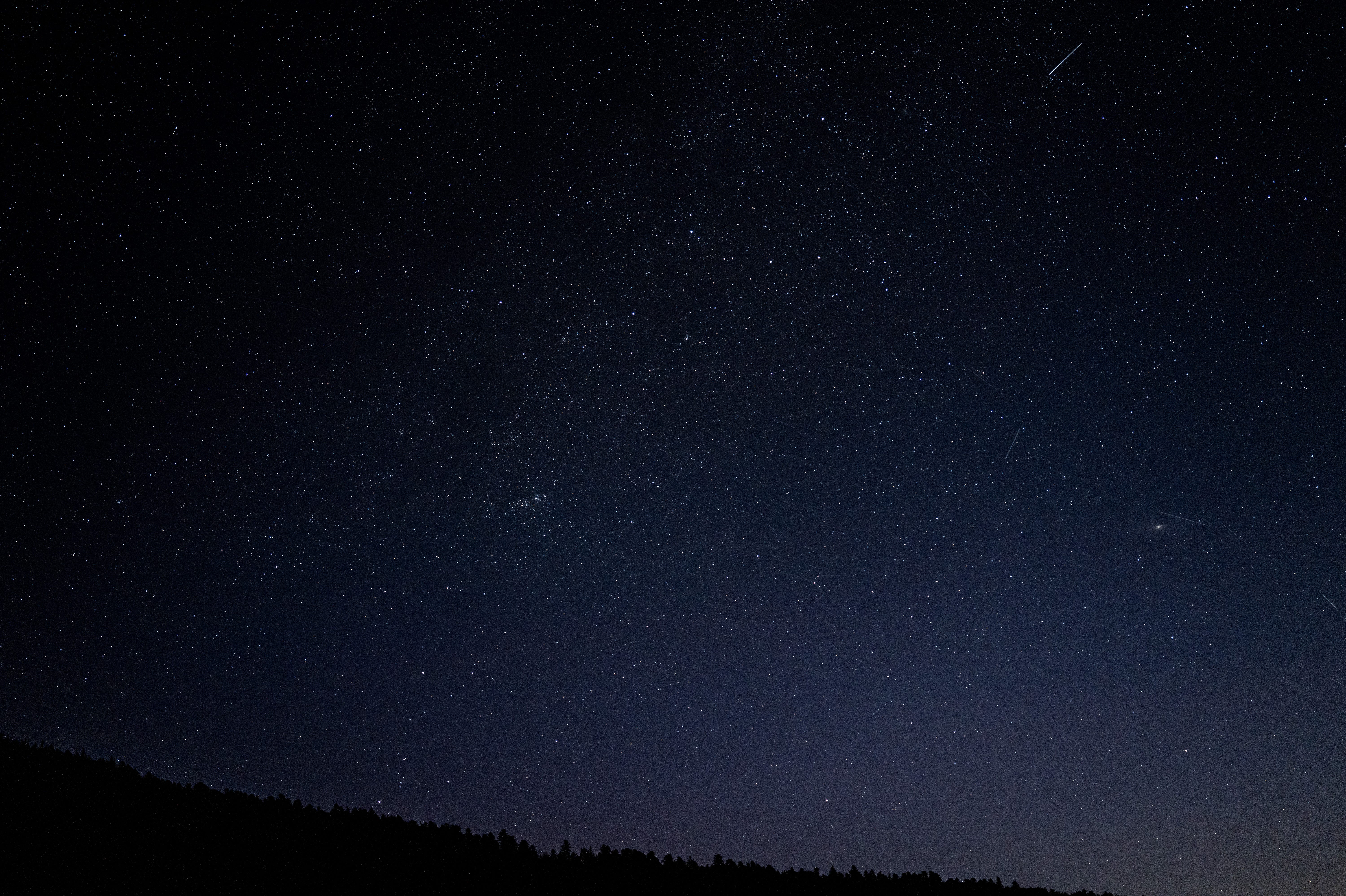
© Michel Heitzmann - 04:55
04:55. Four minutes later. Another meteor. Cleaner, quieter than the first — no chromatic drama, just a bluish-white streak against a sky now visibly turning toward morning. Dawn properly arriving now in the lower right. The window was closing.
Then the window closed. The sky lifted into blue and the stars thinned and Andromeda disappeared from the sensor first, then from the sky.
Slick and Thunder jumped back in the truck and we drove home. Dumped the gear and got back in bed.
Discovered some hours later what was on camera.
The camera? A Leica Q3 43. Not a telescope. Not a star-tracker. Not a modified astro camera. Six seconds, f/2.5, ISO 1600. One instrument, one moment, no tricks. The sky did the rest.
The comet is already gone. The dust is still burning. And for nineteen minutes on Wednesday morning, some of it burned above Bassins while two dogs waited in a truck and someone was outside to see it.
That’s the whole thing. That’s what the app is for.
The Quiet Frame is a bunch of apps built right here, right now. In Switzerland.