
Delete twenty-seven thousand
Michel Heitzmann

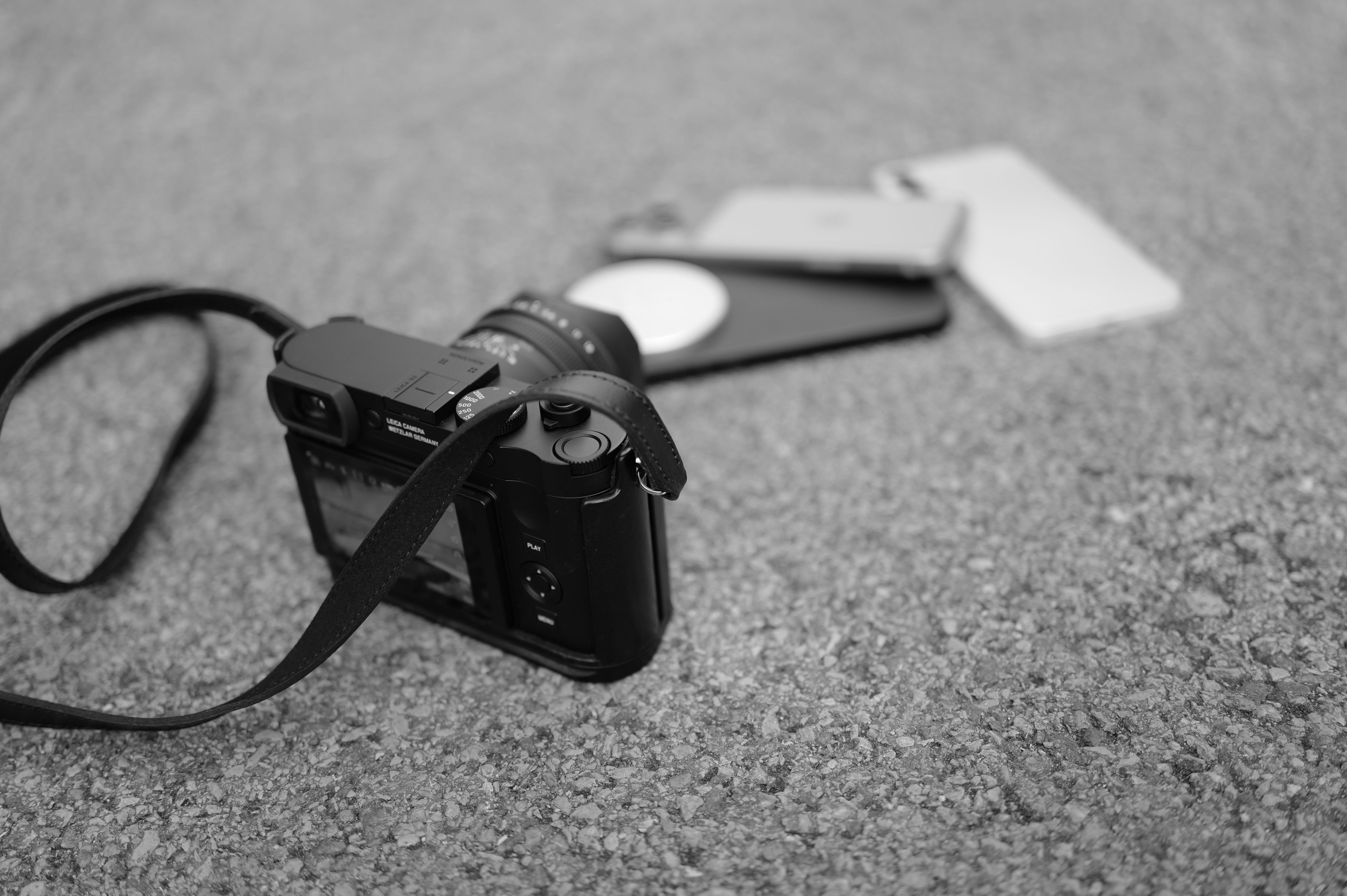
© Michel Heitzmann - Some culprits
My iOS ecosystem helpfully informs that I have 27,590 photographs.
Considering my days alive that amounts to 1.2 photos/day. It is ridiculous.
At three seconds each, a glance, no thought, just a swipe, I would need a full day and night to look at them once. No sleep. No coffee. No blinking. Then I would be done. Once, through my own life.
I will not do that.
So I will die having never seen most of my own photographs. Not for lack of time in some grand sense.
iOS also helpfully reminds me how slimmer I was 10 years ago.
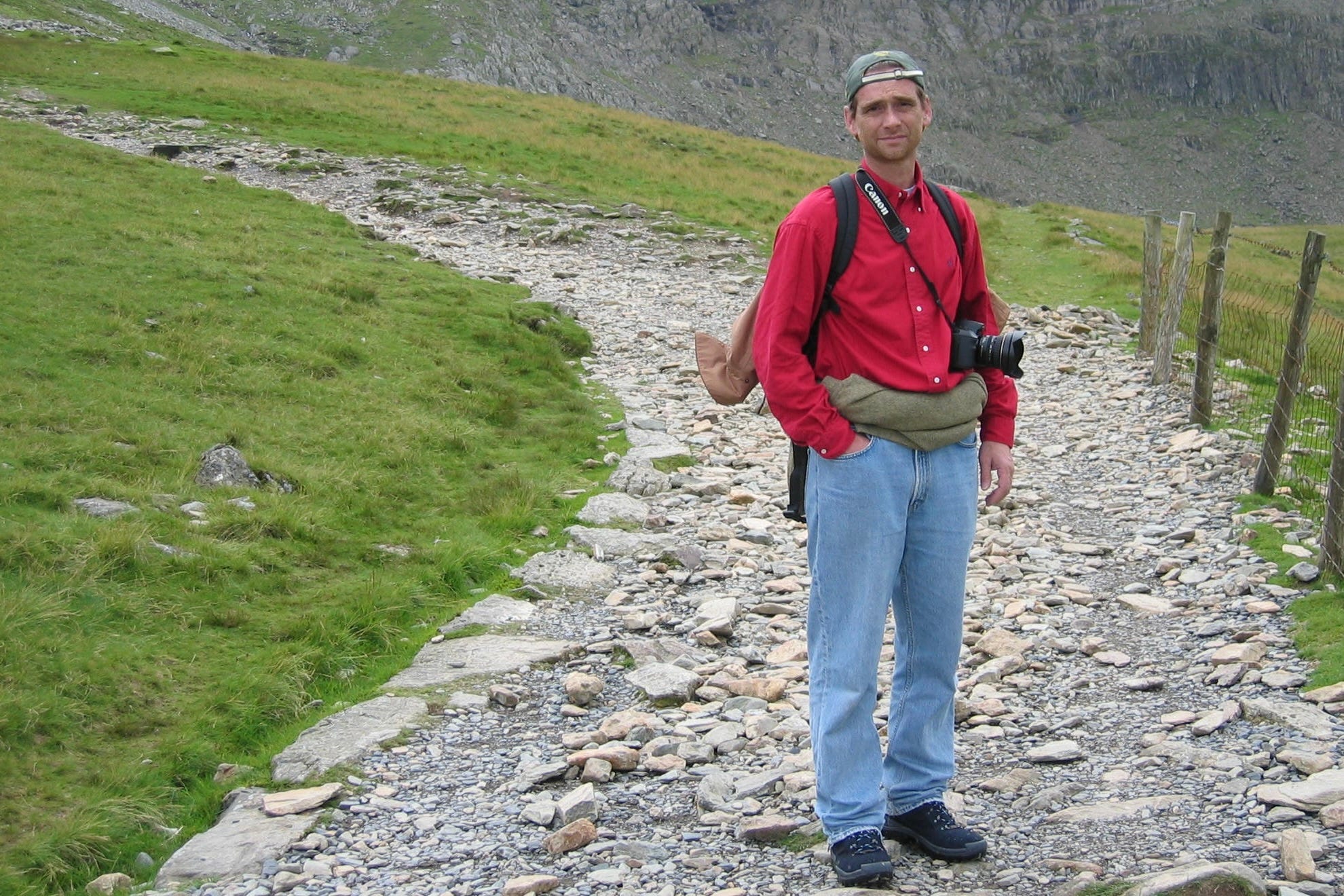
© Michel Heitzmann a quarter of a century ago - I liked that shirt.
It also runs me through an Alzheimer’s test: proof that I stood in THAT place with THAT person, same day, some year past.
I find it great motivational fun to shed weight and to blush.
The explosion of services and their capabilities have supported my absurd accumulating, 1.2 a day.
For those that survive me the obvious is to delete ALL.
Are you sure?
Oh yes. By then I will not care.
A photograph used to be a thing you could hold. Not a file. A frame.
Louis Daguerre, 1839. Each image unique. No negative, no copy, one object only. A polished silver plate, developed over mercury fumes, fixed in salt, kept afterward in a small case lined with velvet, like a locket. To sit for a portrait you stayed frozen for minutes, your head in a hidden brace, so the face would not blur.
A year before, he had aimed his camera down a busy Paris boulevard. The exposure ran about ten minutes. Every carriage, every passer-by, everyone in motion left no mark at all. The street came out deserted. All except two men. One had stopped to have his boots shined. The other bent over them, working. Still long enough to register, both of them. They are the first human beings known to have been photographed. Out of a whole crowded street, the only people who survive are the two who did not move.
A picture was so rare that the Victorians photographed their dead. Sometimes the only image of a person was made after they died.
The daguerreotype had one flaw, and it was fatal. You could not copy it. Each plate was the only one of itself, the way a memory is the only one of itself.
Then an Englishman, Henry Fox Talbot, fixed the image on paper as a negative, and from one negative you could print without end.
The photograph stopped being an object and became a copy. Everything after, the roll, the file, the cloud, the fourteen trillion, is that one decision compounding.
George Eastman went further with his Kodak. “You press the button, we do the rest.” The camera held a hundred shots. He then came up with the $1 camera ($37 today) and made a fortune selling and processing films.
Then film became sensors. Sensors came into phones. Photos in the cloud. Each step cheaper. Each step more. The price and weight of a photograph fell to nothing.
Which is why, unknowingly, I accumulated twenty-seven thousand of them.
The thing stops being memory and becomes inventory. Some of it was never even mine.
Last May, I was in Senegal and found far more joy in talking to folks and in taking pictures than in the group activities. Came back with hundreds of shots and then went Daguerre on them.
Cull. Cull. Cull.
Only the shots that tell a story survive.
In the last 6 months, only 282 made it, each one intentionally kept.
Each belongs on a wall.
The first photograph took about eight hours to make.
Nicéphore Niépce, born Joseph. He took the formidable name Nicéphore, Greek for bringer of victory, over his baptismal Joseph. In 1826, he coated a pewter plate with a light-sensitive asphalt mixture called bitumen of Judea, dug from the Dead Sea, which the Romans appropriately called Lacus Asphaltites, the asphalt lake.
He left it in his camera obscura pointing out his window for 8 hours. A courtyard through a window, most of a day of light for one ghost of an image.
And this is what it should be. A folk. A place. A story.
Slow and cured. Camera always ready. Seldom clicking unless a proper frame can be taken.
I share daily one of my photos through The Quiet Frame app. And I invite you to share yours if you so choose.
The world is loud, but ours doesn’t have to be.
After a frenetic life of which I would have forgotten most unimportant details unless reminded by iOS, I now slow down. I take the time to cherish what this moment meant to others, what the present means to us. That slowing down is wonderfully powerful.
I also find that a bathroom break is a wonderful culling opportunity when compared to reading news.
How much of what your phone calls your memories did you actually live?
The Quiet Frame shows you one photograph at a time, and is available for Android and iOS. You can get the app here if you are reading this on your device.
Alternatively, scan the QR below:

The Quiet Frame is free for 180 days and we would love to have your feedback and photos too (hey@thequietframe.com).