
Murderers and Artists
by Michel Heitzmann

Milan sells a front.
Beautiful people.
Via Montenapoleone, windows lit like altars, bags and shoes carried out like relics. Exquisite mises-en-scène.
The Duomo behind three hundred and nineteen raised phones, not one of the owners looking at it.
Everyone moves. Steps on the bull’s testicles rotating.
Everyone buys, or snaps the thing they were told to photograph.
A rat race with better tailoring.
The front is gorgeous, the stories also sit one turn behind it, below it, off to the side.
Let me offer three with a tad of history.
In 1700, the Confraternita dei Lavandai di Milano (Brotherhood of Milanese Washermen) was officially established and operated 19 public washing sites to do the laundry of the well-off.
They even had a patron saint (Sant’Antonio da Padova) and their own church (Santa Maria delle Grazie al Naviglio).
Men. Laundry. Pick up and delivery included. A monopoly: they controlled the best sites to launder off the Naviglio Grande - a super long man made canal, of course this being Italy, many centuries ago.
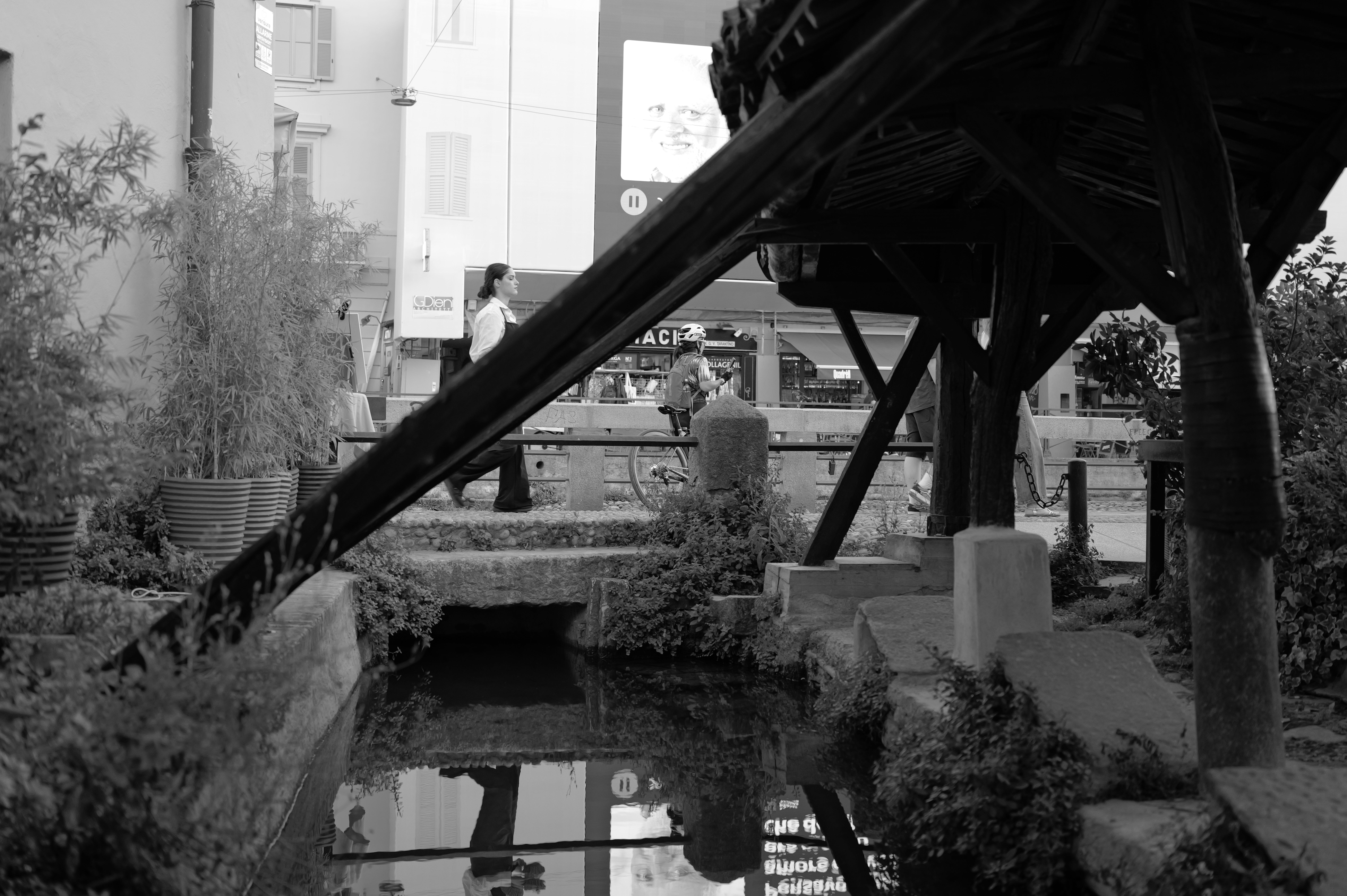
© Michel Heitzmann - Laundry station under a Shopify ad
Washermen. Until some world war got in the way and they became more useful dying on a front. Enter women, 2 world wars, sites used until the late 50’s.
They had the right relationship management before Salesforce or other CRM existed. Today’s equivalent is hard to picture now that South Korean machines do the work, but think gig economy: the people who launder and ferry us around through an app. Controlling the sites is now controlling the platform.
Then the canal itself, when you look down instead of up. The houses on the far bank broken into the water, blue and ochre coming apart and holding together with each ripple.
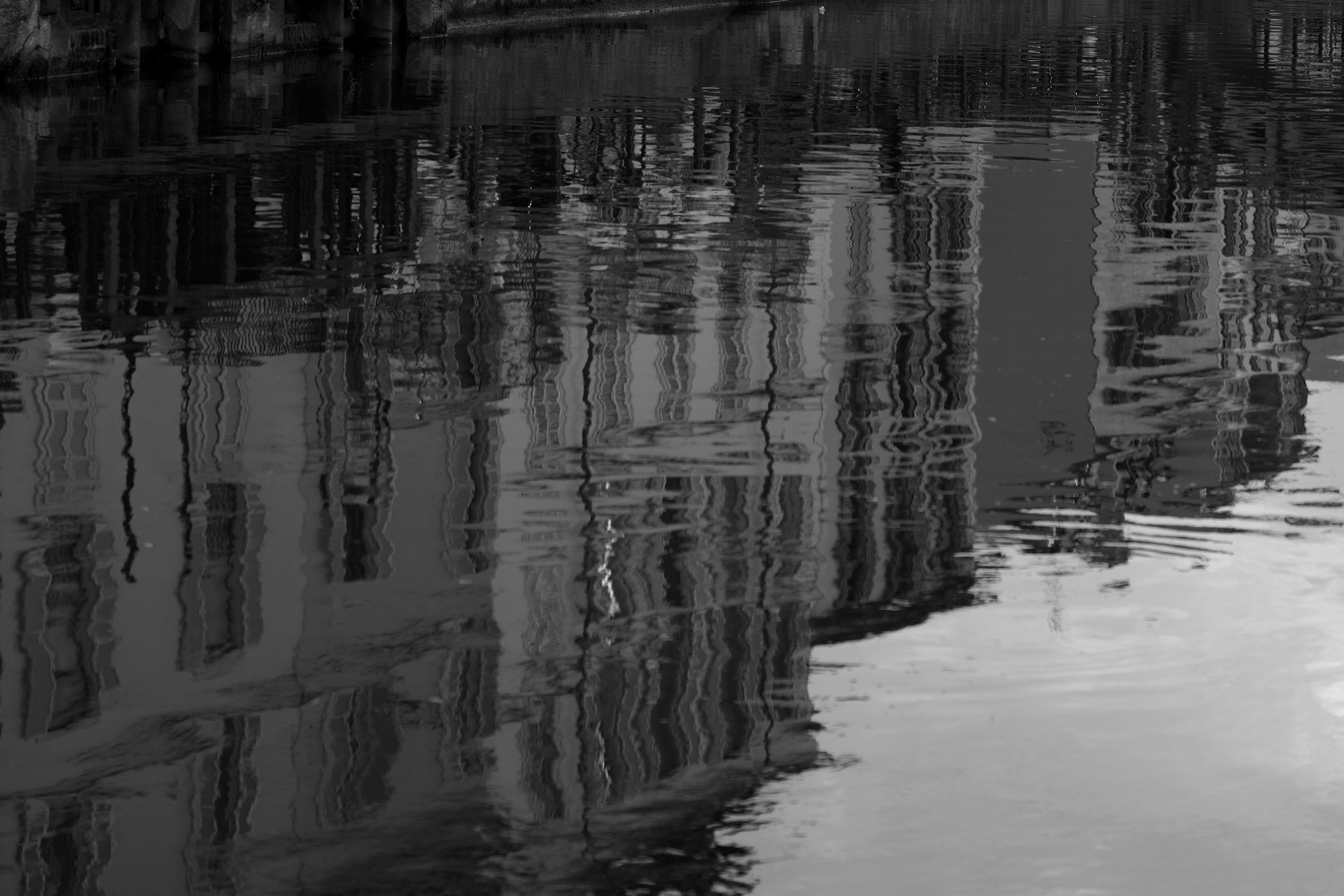
© Michel Heitzmann - Buildings reflect
The Naviglio Grande was dug by hand from 1179, fifty kilometres of it, drawing from the Ticino river which pours out of Lago Maggiore. I repeat, dug by hand.
Whose hands? Prisoners from Turbigo, set to the pickaxe in 1239. Not the last canal dug by prisoners.
A master called Giacomo Arribotti levelled the bed and made it navigable in 1272. You have never heard of him. The podestà who ordered the work, a Bolognese called Beno de’ Gozzadini, was put on trial that same year for taxing Milan too hard to pay for it. Nor him.
The canal is a trade route where the great Leonardo (the original, not the football player) installed some very nifty gates to control the flows about five hundred years ago. They still work.
The marble of the Duomo, the white front three hundred and nineteen phones are aimed at right now, came down this canal on barges from the quarries at Candoglia.
Gian Galeazzo Visconti, Lord of Milan, exempted the marble from tolls. From 1387 each block was marked AUF, Ad Usum Fabricae, for the use of the works, and waved through without a toll.
The city liked the deal so well, they say, that it kept the word. A ufo, the Italian for getting something for nothing, was born on this water.
Napoleon, unlike some current leaders who like to build, was unbothered by congressional blocks or ill-behaved judges, and ordered the unfinished façade completed. He was crowned king of Italy in the Duomo in 1805; the façade itself was not finished until around 1813.
Can-you-believe-it fact: The Veneranda Fabbrica del Duomo, the original body Visconti founded, still exists more than six centuries later with about 200 employees to repair the church and sell us tickets.
Back near the Duomo, off Via Sant’Andrea, a single passage in from the boutiques, a thirty-metre painting fills a courtyard. Justice and Peace, two women holding each other, sprayed by Andrea Ravo Mattoni after a canvas Corrado Giaquinto painted in 1754.
Andrea is from Varese, close enough to the border that the Italian Swiss claim him as one of their own, as his work travels across Europe. This one belongs to his older project, Recupero del Classicismo, reclaiming the old masters.
Today he also uses an AI model he built: it generates the images, and he draws, sprays and paints them by hand. AI done right?
Someone gave Justice and Peace to the city and kept their own name off it. The shoppers are forty metres away and they will not come in.
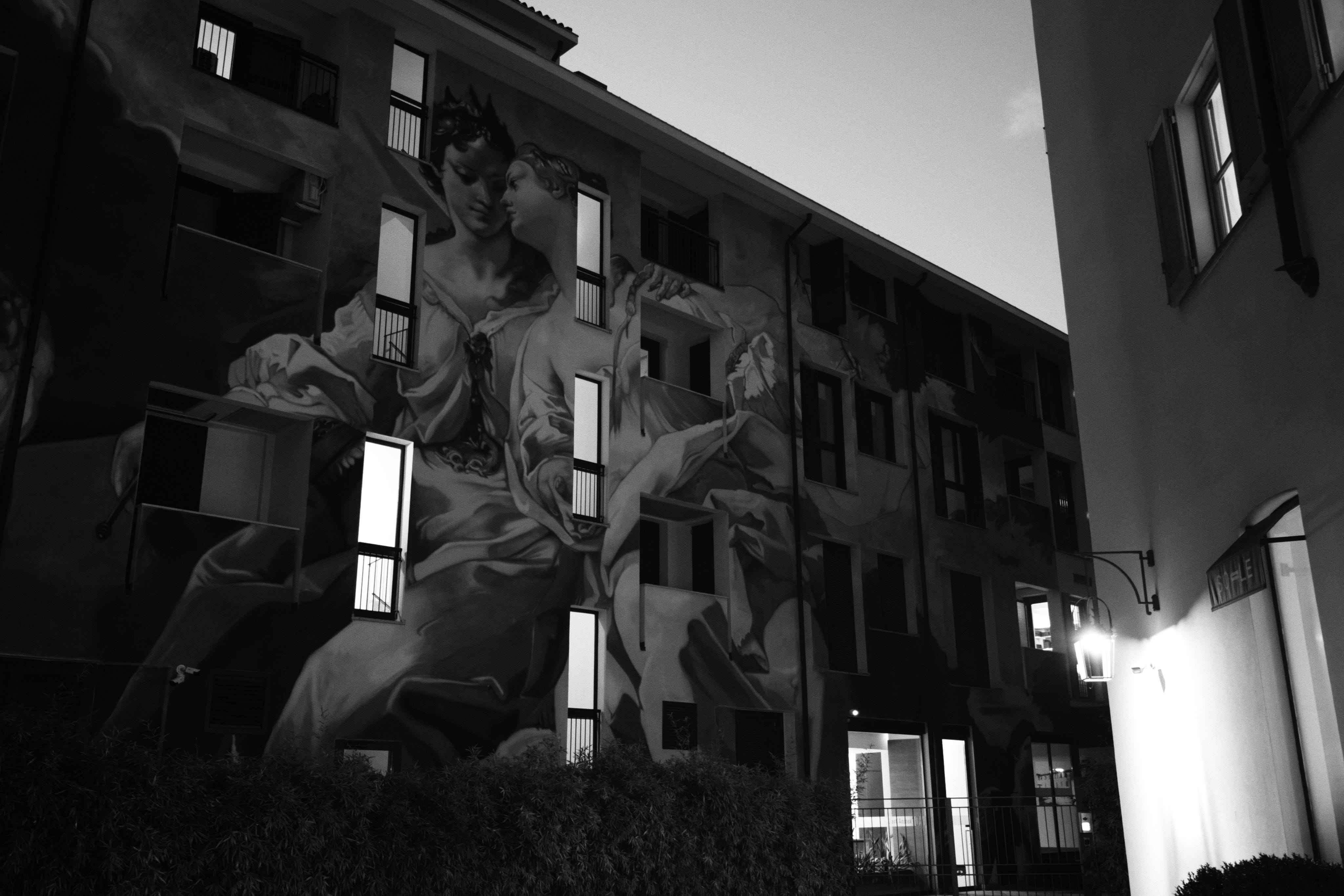
© Michel Heitzmann - Living with history
Centuries and forgotten humans knitting what we witness today.
Run the body count down this page. Giaquinto, Ravo, the saint: nobody. Leonardo the original: nobody, though he drew the war machines. The other Leonardo, the elbow at the ’94 World Cup: one, Tab Ramos’s skull, and Ramos lived.
Visconti: thousands, never tallied. Napoleon, who finished the city’s most beautiful front: three to six million.
The unnamed leader? Although lethality seems fundamental, the count is currently on hold as the strait might reopen.
And the canal kept no ledger at all: fifty kilometres dug by hand over a century, plus every body the water has taken in the eight hundred years since. It built the city, carried the cathedral, killed the whole time, and left no one to blame.
Only the murderers and artists are known to us.
And yet, I have to ask:
Are you in the crowd, or are you noticing?
I built three apps for the noticing. Free, on iOS and Android. No notifications, no streaks, no algorithm, nothing to win. A couple of minutes a day in the other direction, toward whatever sits one turn off the route. They will not make you known. That was never the point. thequietframe.com/app.
Thanks for reading.