
Vertigo
by Michel Heitzmann

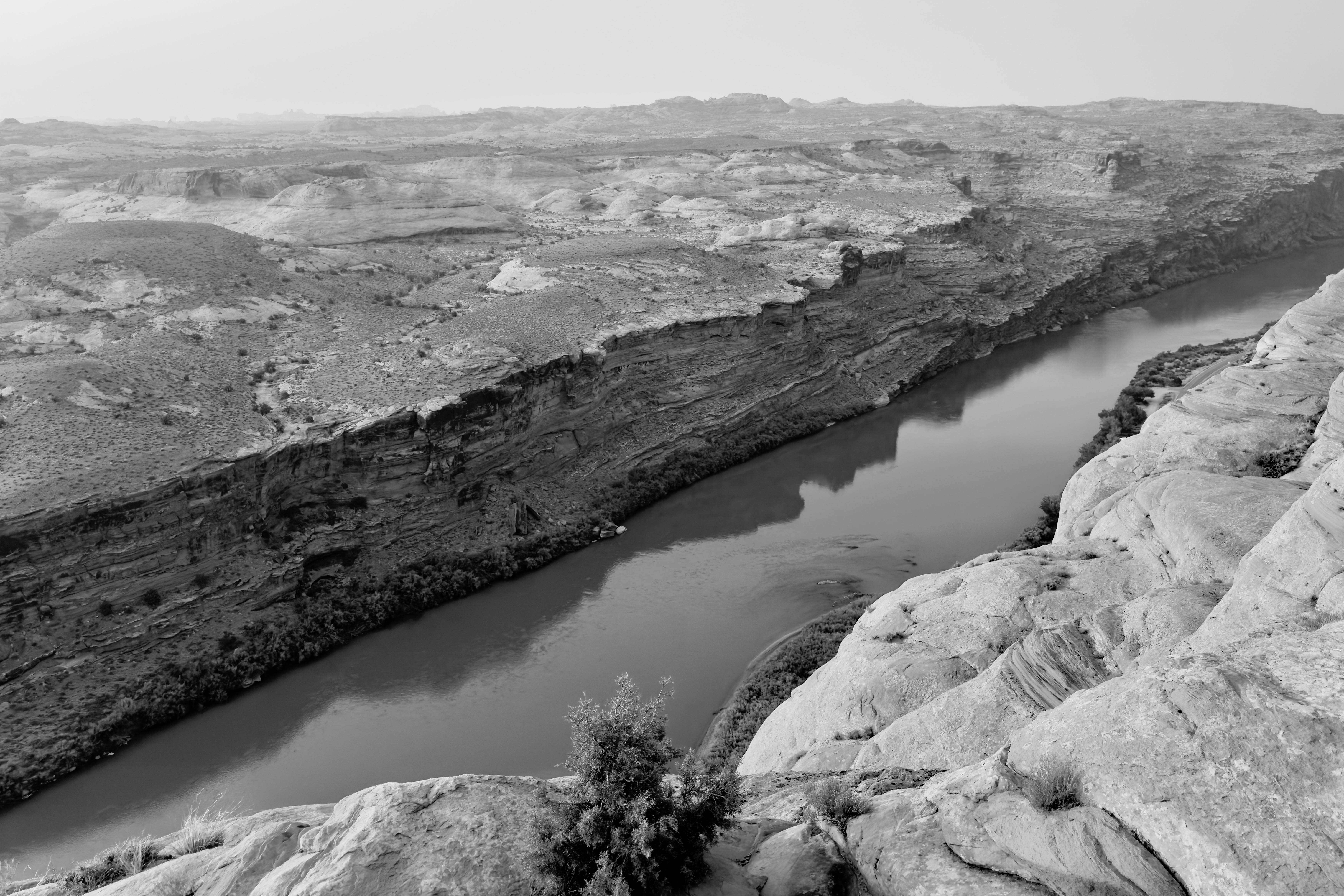
© Michel Heitzmann - The edge
While the US reflects on pools and soccer, I got a call from someone from the past.
A brilliant career has come to an end. Now what?
Someone with means and freedom to choose struggling with what was expected to happen. According to others. What would they think of me? We talked.
I asked: “who cares?”
Something lifted. The permission had been theirs all along.
I keep meeting this person. The pattern. People at the top of something, with everything they need to leave already in hand, waiting for someone they trust to ask the thing they cannot ask themselves.
They are not trapped by the job. They are trapped by how everyone will look at them after. They have carried other people’s expectations so long they mistake them for their own ambition.
There is a name for the feeling at the edge. The French had it first. It happens.
L’appel du vide (call of the void.)
You stand somewhere high, calm, no wish to fall, and some part of you lurches toward the drop. Terror.
Empire State Building, Tour Eiffel, cliffs, office buildings with floor to ceiling windows, I always must stand a good 2 meters from the drop.
I took a photograph from the top of a rock above the Colorado River. The view is wide and still and from up there the river looks like it always meant to bend that way, like the curve was chosen.
The water took the only path the rock allowed and a few million years later the persistence looks like grace. I did not feel any of that while I shot it. I felt sick. I was closer to the edge than I wanted to be and my legs knew it. I had to sit down. The composed picture cost real fear to reach. I crawled back on my butt after the snapshot. Terror.
In 2012 Jennifer Hames, a researcher at the University of Notre Dame, put numbers to it.
Half the people she surveyed who had never once thought about death had felt that pull at a height. Her finding is the part worth keeping.
The pull is not a death wish. It is a survival signal, firing so fast the body skips the words. Back up. You might fall. The mind catches only the edge and reads it as jump. The urge to jump, she wrote, affirms the urge to live.
On a cliff the signal is correct. Back up. Do not move. You will actually die. The body is telling the truth.
The trouble is the body cannot tell a cliff from a resignation letter or retirement. It runs the same program at every edge.
The same lurch, the same dizziness, the same back up, you might fall. And at the other kind of edge, the one we stand at, backing up is the fall. Staying safe is the slow version of going over. The instinct that keeps you alive on the rock is the exact instinct that keeps you stuck in life.
Stuck.
We feel the identical pull and, then before we back up, we should ask which edge we are standing on.
We cannot ask that question while the alarm is piercing.
Breathe. Rely on someone you trust.
Quiet the body enough that the question can fit.
Hold the pause open long enough to look.
Think of the horrors we witness. We are so damn lucky not to be caught in the terror we see on screens.
Our terror?
When we are old and our friends are dead or dying, and the only question left is the one we can no longer act on. What if…
There, perhaps the answer to who cares is clearer.
There is an old mirror I keep. It is way older than I am.
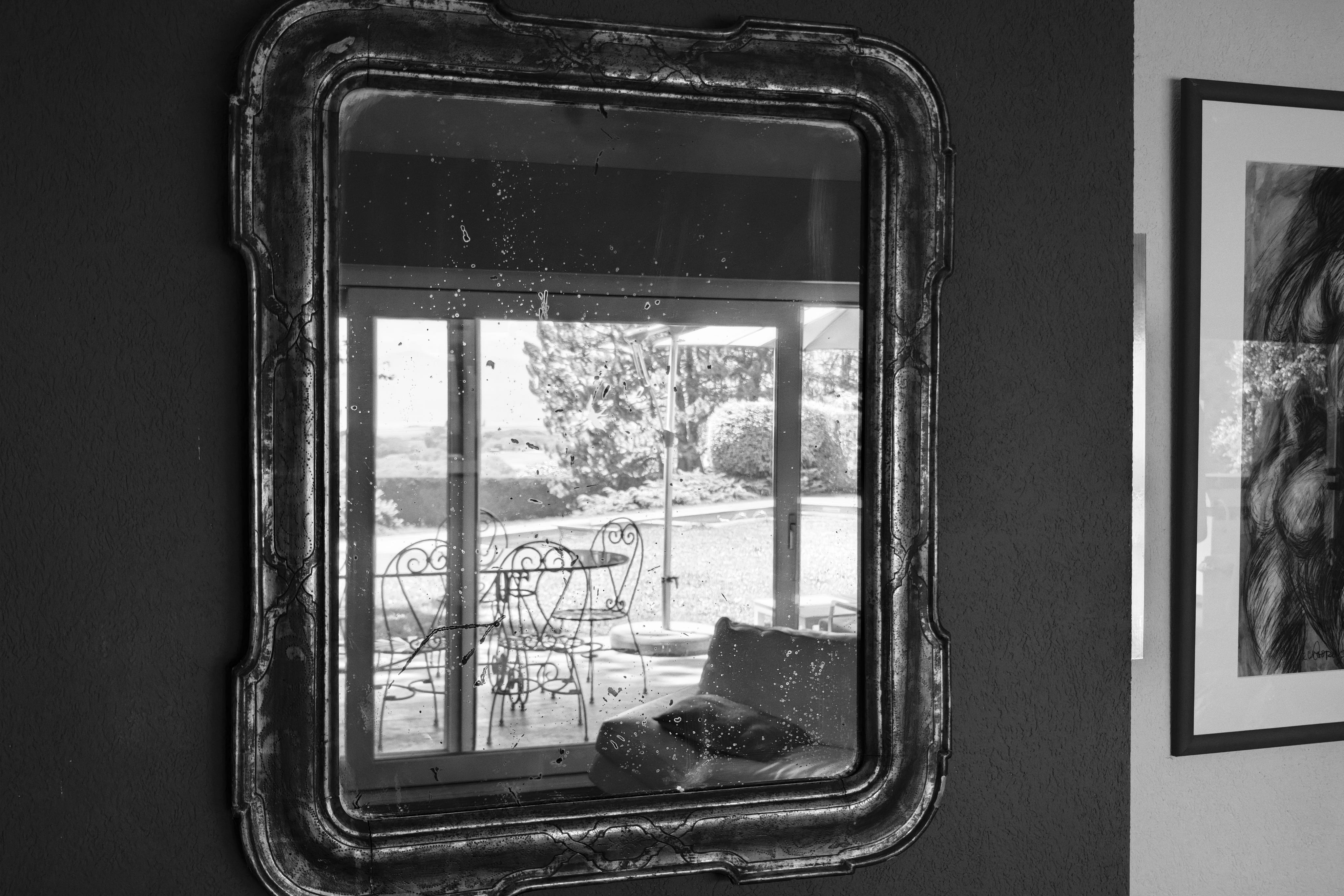
© Michel Heitzmann - Mirror, mirror
The silver has gone in patches and it no longer gives you back a clean face. You have to stand still in front of it to find yourself at all, and even then only parts. I think that is closer to the truth than any clear glass. We do not see ourselves directly. We catch ourselves in something held still, in someone who holds still, and we notice.
Next to each terrifying cliff, a pause before backing up.
Mirror, mirror. Am I stuck?
I take photographs in black and white. I sit with people deciding what comes next. It is the same work: framing.
You hold something still long enough to see it. What you see or keep is up to you.
The Quiet Frame also makes free apps, on Apple and Android, at thequietframe.com.